Resource Efficient Homes Across America
A Showcase of Resource-Efficient Homes
Keyword Search:
Overview Why be Efficient? What is Homes Across America? Search for a home Submit a home profile

Resource-Efficient Upgrade
Resource Efficient Features


Overview

Features

Innovations

Climate

Partners

Gallery


Site And Design

17%

Green Products

21%

Waste Management

10%

Indoor Air Quality

28%

Energy Efficiency

17%

Water Protection

3%

Universal Design

3%
(Percentages above indicate the distribution of features and total 100%)

Utilization of Existing Infrastructure
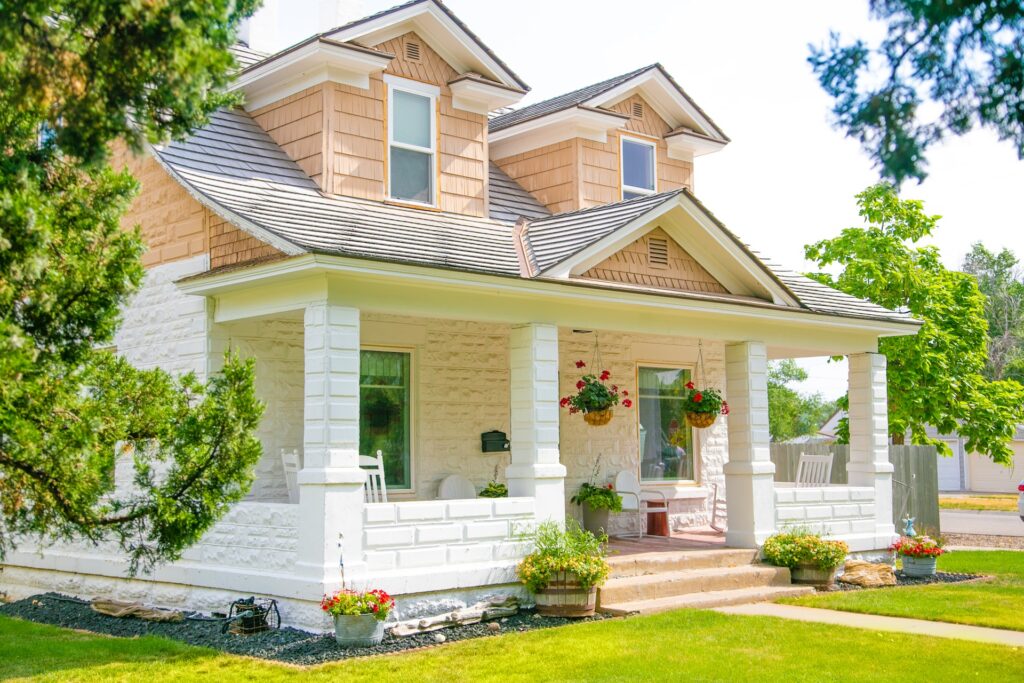
This project is the renovation of an existing home. The owners love the character of the early 1900s neighborhood, but wished to accommodate an extended family.

Preservation of Trees and Existing Vegetation
Trees and an existing garden were maintained through the design and during construction of the home.

Modest Size Design
This two-bedroom home was expanded with the addition of a floor and three new bedrooms. The exterior appearance is that of a one and one-half story with dormers. The second story was divided vertically to allow for a family wing, while the original first floor bedrooms were converted for the in-laws. None of the bedrooms are of grand size allowing the owners to provide for everybody while maintaining the original footprint of the home.

Orientation and design for daylighting
Options were limited for placement of windows given the orientation of the existing home and style of the home. Designers were careful in the placement of windows to maximize the benefits of daylight and maintain both privacy and character. Additional daylighting strategies were used to enhance the light that was available. The 1st floor kitchen was opened up, which helps to disperse light. The walls throughout the renovation were painted light and bright to accentuate natural daylight.

Window Sizing, Location and Shading
The home renovation includes banks of casement windows to make the space well lit and bright. Light coloring on the walls adds to the daylighting effects. The master bedroom is located on the south side below the gable roof and again maximizes daylighting with ample windows.

Sub-Floor
The sub-floor and sheathing materials are engineered lumber products from Advantek. Engineered wood reduces consumption of larger diameter timber and makes use of mill waste products.

Windows
The windows placed in this home are Norco wooden casement windows by JELD-WEN. Argon gas between the panes acts as a thermal barrier while a low-e coating helps to block ultraviolet rays. These windows meet the national energy performance rating system established by the National Fenestration Rating Council (NFRC).

Doors
Exterior doors are insulated to maintain a tight building envelope.

Exterior Wall Finishes
The exterior was finished in character with the original home using stucco and brick. These materials are durable and locally acquired.

Roof
A rubber shingle product called Duraslate provides a durable (warranteed for 40 years) and protective finish to the home.

Finish Floor
The existing floor was reused in the lower portion of the home. The upper floor was finished in hardwood, except in the bathrooms tile was laid.

Waste Reduction through Process Modification
A central cut area was established to make the best use of scraps on the project.

Deconstruction
The kitchen of the existing home needed to be removed prior to any renovation of this home. Rather than demolishing the existing structure, a non-profit was hired to perform deconstruction and salvage of the materials. Framing, roof, cabinetry, trim, insulation and appliances were salvaged. More detail on this system is available here.

Alternatives to Burying or Burning Construction Waste
Appliances and cabinets from the existing kitchen were donated. Some went to ReStore, a salvage materials store for contractors and homeowners. Other salvaged materials such as insulation, headers, trim were reused in the renovation project. Some recycling took place. Visit the Innovation details for Deconstruction to learn more.

Products with Minimal Off-Gas
Fiberglass insulation certified to be formaldehyde free was placed in the slopes of the attic. Cellulose insulation was used on the flat ceilings. Both have minimal off-gassing characteristics. Chlorofluorocarbons (CFC) commonly used as refrigerants in cooling systems were avoided with the selection of a CFC-free air conditioning system. CFCs are ozone-depleting substances.

Water-Based Finishes
Water based paints with low Volatile Organic Compound (VOC) emissions were used throughout the home.

Reduction of Textiles, Maximized Hard Floor Surfaces
All of the flooring surfaces installed during the installation were hard surfaces. These surfaces are easily cleaned and help to reduce potential moisture buildup that can develop into mold or mildew problems.

Bathroom and Kitchen Fans and Dryer Vented to Outside; Tested
Bathroom and kitchen fans were vented to the exterior of the home.

Water Management for Foundation, Attic and Walls
A corrugated paper product known as stucco wrap was placed between the stucco and the tyvek house wrap. The ridged product helps to address moisture issues by channeling moisture behind the stucco finish.

Detached Garage (or attached with "advanced sealing")
The garage is attached, yet weather stripping and sealing around the door jams help to keep the space separated from the living areas.

Duct and Furnace Cleaning Prior to Occupancy
All HVAC system ducts were covered and taped during construction. At the end of the job the ducts were cleaned prior to putting them back into use.

Harmful Gas Monitoring and Control
Carbon monoxide detectors monitor and provide warning of potential problems.

Building Envelope
The builders used a housewrap around the building envelope to provide an air barrier. The first floor was brick construction, while the upper floor was framed. Additional air sealing techniques were applied as per the recommendations of the Building Science Corporation. These included sealing all housewrap seams, drywall joints, penetrations, and top plates. The sheathing was sealed around the perimeter; joists, insulated headers, t-walls and corners were sealed. Airtight recessed fixtures were installed on the top floor to accommodate a thorough application of insulation over the fixtures. The attic was sealed and insulated.

Flashing was applied to the windows and doors to protect against water infiltration. Additionally, an ice and water shield by Grace was installed at the eves and overhangs during the renovation. This shield consists of rubber (1/16" thick) that adheres to the roof in areas more susceptible to leakage behind flashings. The shield acts to prevent ice dams along the roof.

Mechanical Systems
The heating and air conditioning (HVAC) system was designed to meet the needs of the home, while not being oversized to account for energy losses. Attic insulation was installed so that no ductwork runs through uninsulated space. Ample insulation and appropriate air flow in the home allows the forced air system to operate within Manual J, the industry's standard for the proper sizing and selection of HVAC equipment in residential homes. The furnace is a 90 percent efficiency heating unit operating within 2500 British thermal units (Btu) per hour of Manual J. The cooling unit has a Seasonal Energy Efficiency Rating (SEER) of 14 and operates within 6000 Btu per hour of Manual J. The system uses no chlorofluorocarbons (CFC) in the refrigerant process.

Appliances
All appliances placed in the home were chosen on the basis of their energy efficiency. The refrigerator and dishwasher are Energy Star appliances.

Lighting
Compact Fluorescent lighting was used in conjunction with daylighting techniques (see Site and Design) to obtain an energy efficient lighting package.

Report performance data if available
The attic was insulated to R-value 38 with spray-in cellulose on flat surfaces and formaldehyde free fiberglass on sloping surfaces. This level of insulation exceeds the minimal code requirements of R-30 in Virginia. Exterior walls were insulated with fiberglass batts to a level of R-19 (code requires R-13).

Best Management Practices (BMPs) for Stormwater
A permeable driveway was constructed to allow water to infiltrate rather than runoff. In addition, a Green Roof was created in place of a conventional roof. A green roof is a vegetated surface that collects and uses rainwater. The plants manage moisture naturally and reduce reflectance of the sun, which helps to reduce heat island effects in urban areas. The roof is designed to manage approximately one-half of the water that falls on the home. To learn more about this green roof visit the Innovation page. To learn more about options and techniques for building a green roof visit the Whole Building Design Guide. More detail on this system is available here.

General living space
The hallways were constructed to a width that will provide accessibility to the disabled and elderly.


Search Again


  Site Traffic
2006: 71,129 visitors
View Web Trends reports

 
  Pollution Prevention Resource Exchange Montana State University Extension Peaks to Prairies  

Has this publication been helpful to you?
Please email us about how this information helped you in your daily life: information@peakstoprairies.org


This showcase is for educational and informational purposes. It is meant to provide ideas and contacts for further assistance. We do not endorse particular products or services. It is the responsibility of the user to check references and facts prior to making use of the information.

The contents of this website are public information and may not be copyrighted in any form, sold or used for profit in any way. The information within the showcase may only be printed when this notice is included and credit is given to the Peaks to Prairies Pollution Prevention Information Center and the individuals cited in each home profile.